

Reviewed · SELF-GUIDED TOURS
Self-Guided Audio Tour to the Dark Side of Zurich
Zurich’s polished streets conceal a grim past, and this walk brings that past into view. From Paradeplatz to Herkulesbrunnen, you follow the old route of executioners, accused witches, prisoners, judges, and condemned religious dissenters. The professional narration has a notably deep voice, which suits the subject.
I like the easy route and the way it leads you through corners of the Old Town you might otherwise pass by. I also like the flexibility: you can pause, take photos, enter Fraumünster if you wish, and continue without keeping up with a group.
The main drawback is the narrow subject. Some narration can feel like a string of facts, and the material is often grim. If stories of torture, executions, and witch hunts are difficult for you, this may not be the right city walk.
Key points to know before you book
- Fourteen stops connect Zurich’s streets to witch trials and executions, from Paradeplatz to Herkulesbrunnen.
- The route is easy to follow, with photos, directions, and an audio link sent after booking.
- The walk takes about one to two hours, though you control the pace.
- The tour costs $13.22 per person, making it a modest way to add structure to an Old Town stroll.
- Fraumünster is visited from the outside, with an optional CHF 5 entry fee if you want to see the church interior.
- You need your own phone, internet connection, and headset, and there is no live guide.
Zurich’s darker side begins at Paradeplatz
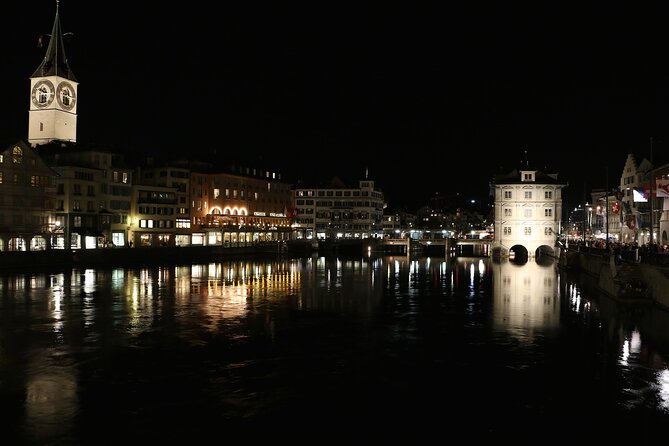
Start at Paradeplatz, one of Zurich’s best-known central squares. Today it is associated with finance and busy city life, but the audio places it in a very different setting: the former world of executioners and accused witches.
You hear about an executioner’s residence and the unusual training required for the job. That detail gives the opening some useful context. Execution was not simply a matter of someone being handed a weapon and sent into the square. It was a skilled, feared, and socially awkward profession.
The five-minute stop is brief, but it sets the tone. This is not a general sightseeing tour with a few spooky stories added on. The walk keeps asking how ordinary streets were connected to punishment, public fear, and the machinery of medieval justice.
Other tours you can walk on your own in Zurich:
- Self-Guided Audio City Tour in Zurich
★ 4.0 · 15 reviews - Zurich Scavenger Hunt and Sights Self-Guided Tour
★ 5.0 · 10 reviews - Mt. Rigi Self-Guided Tour: Lake Lucerne Cruise and Mountain Spa
★ 4.5 · 83 reviews
Börsenstrasse and the work of the executioner
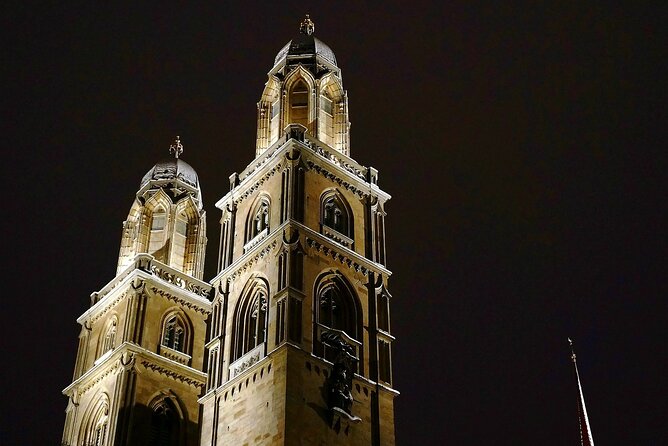
A short walk brings you to Börsenstrasse, where executioners once lived. Here the narration covers popular execution methods, the executioner’s pay, and how often these events took place.
That practical detail is one of the better features of the tour. You get more than a list of names and dates. You begin to picture execution as a public system with workers, wages, procedures, and an audience.
Still, the audio can sometimes pack in too many facts. If you prefer a strong story with a clear beginning and end, a few sections may feel more like a historical briefing than a dramatic tale. You can pause the recording and take in the street around you, which helps keep the experience from becoming a race between stops.
Along the Limmat, stories of accused witches
At the Limmat, the tone becomes more personal. The narration tells the stories of women accused of witchcraft and focuses on Elsbeth, who endured fifteen days of torture.
This is the point where the tour’s subject becomes hardest to hear. The stories are not light folklore. They deal with fear, forced confessions, and the treatment of people who had little power against the authorities.
I appreciate that the route connects these accounts to a real place beside the river rather than leaving them as distant facts. You are not entering a museum display. You are walking through the city while hearing how punishment once shaped the lives of people who lived there.
The tour does not present the past as fair or humane. That is useful, but it may also feel emotionally heavy. One response to this kind of material is to view it as a reminder of how legal systems can fail. Another is simply to find it too bleak for a holiday walk. Both reactions are reasonable.
Fraumünster adds art to a grim route
Fraumünster Church provides a change of mood. The church is known for Marc Chagall’s stained-glass windows, including imagery connected with the crucifixion of Jesus Christ.
The walk points you to the church, but the standard tour does not include interior admission. If you decide to go inside, the fee is CHF 5 per person. That extra cost is worth considering because the interior gives you a visual break from the darker stories and adds one of Zurich’s most important artistic sights.
One useful tip is to plan your timing around the church. The audio stop itself is listed as about five minutes, but you may want longer if you enter. If you are trying to finish the whole route within an hour, remain outside. If you have two hours, the interior visit fits naturally into the walk.
A few more things to do in Zurich worth a look
- Zurich Private Customizable Guided Walking Tour
★ 5.0 · 195 reviews - Glacier Express Panoramic Train Round Trip from Zürich With Private Guide
★ 4.5 · 34 reviews - Private Guided Swiss Alps Day Trip from Zurich with Hotel Pick-Up
★ 5.0 · 15 reviews - Zurich : Private Custom Walking Tour with A Guide ( Private Tour)
★ 4.0 · 14 reviews
Hans Waldmann and the price of political power
The Hans Waldmann Statue recalls a man executed in 1489. The story explores his unusual life and his fall from power.
This stop broadens the tour beyond witch hunts. Zurich’s past was not shaped only by accusations against ordinary people. Political authority could also turn against a powerful figure. The statue gives you a fixed landmark and a chance to consider how public memory treats someone who was once important but ended his life at the executioner’s hand.
The stop is short, so do not expect a full biography. Instead, think of it as a compact explanation of why this statue matters and how it fits the city’s history of punishment.
Wasserkirche and the legend of Felix and Regula
At Wasserkirche, the audio turns to the legend of Felix and Regula, who were beheaded because of their Christian beliefs.
This is one of the route’s more unusual shifts. The story is tied to religious conviction and martyrdom, not witchcraft or civic prosecution. It also connects the walk to Zurich’s older religious identity, giving you another way to read the churches and waterfront around you.
The nearby Grossmünster is passed along the way. You do not stop for a full visit, but the church is identified as an important symbol of the Swiss German Reformation and Zurich’s heritage. If you are already interested in the city’s religious history, this portion may be especially useful.
Kirchgasse and old advice on identifying witches
Kirchgasse brings the tour back to the witch hunts. The narration describes old guidance on recognizing witches and the methods of torture associated with such accusations.
This stop shows how suspicion could be turned into a set of supposed rules. Once people believed that a witch could be identified by certain signs, ordinary behavior and personal conflict could become dangerous. The city street helps make that process feel less remote.
The subject is disturbing, and the audio does not soften it. You should expect plain discussion of cruel practices rather than a playful ghost walk. Families with children may want to decide carefully based on their children’s age and comfort with the subject, since no specific age guidance is provided.
Untere Zäune and a wealthy woman accused of witchcraft
At Untere Zäune, you pause near the former residence of a wealthy woman executed for witchcraft. Her story adds social detail to the broader subject.
This is a worthwhile stop because it challenges the easy idea that only poor or powerless people were accused. Wealth did not always protect someone from suspicion, prosecution, or execution. The house gives you a physical point of reference for a story that might otherwise feel abstract.
The stop also shows one advantage of a self-guided walk. You are given time to look at the surrounding streets and buildings instead of standing in a group while a guide moves quickly to the next location.
Neumarkt and the former pillory
At Neumarkt, you learn about the former pillory. Public humiliation was another form of punishment, less final than execution but still designed to expose a person before the community.
This is a useful contrast with the more severe stories earlier in the walk. Justice did not always end with death. Shame, exposure, and the loss of public standing could also be imposed in a central square.
The stop is short and the landmark itself may not be obvious to a modern visitor. That is where the photos and route directions matter. You are not simply told to wander through the Old Town and hope you find the right spot.
Obere Zäune and the judge behind the witch hunts
At Obere Zäune, you see the house associated with the judge who worked during the height of the witch hunts. The story includes a revenge episode, adding a personal motive to the larger system.
I find this kind of detail useful because it shows that prosecution was not always a cold, neutral process. Personal grudges and local power could shape the way accusations were handled. The tour does not treat the past as a clean machine of law and order.
As with several stops, the story is concise. If you want full background on Zurich’s courts or the judge himself, this walk may leave you wanting more. Its strength is coverage: it links many places in a compact route rather than examining one case at great length.
Zürich’s Town Hall and the square of judgment
The Town Hall stop explains medieval prosecution and points out the square where death sentences were pronounced.
This is one of the most helpful stops for understanding how the pieces fit together. Earlier, you heard about executioners, torture, accused witches, and public punishment. Here, the narration focuses on the official process that turned accusations into legal decisions.
The Town Hall is also a practical midpoint or late-stage landmark. You can pause nearby, check your remaining route, and decide how quickly to continue. Because the tour is private to your own group, there is no pressure to keep moving at someone else’s pace.
Täufergedenkplatte and executions by drowning
The Täufergedenkplatte memorial plate recalls Anabaptists who were executed by drowning. This is another reminder that religious disagreement could carry a deadly price.
The memorial gives the subject a more direct and solemn focus. Rather than hearing only about a former procedure, you encounter a marker connected to people who suffered because of their beliefs. It is a brief stop, but it adds weight to the route.
The audio walk works best when you treat these locations as places for reflection, not just checkpoints. You can listen, stop the recording, and spend a few quiet minutes looking around before continuing.
Rennweg and the baker’s last sip
At Rennweg, the story moves to a baker who was responsible for giving condemned people their last sip.
This small detail is one of the tour’s more memorable touches. It shows how execution affected everyday workers who were not the judge or the executioner. A baker’s ordinary trade could become part of the final moments of a prisoner’s life.
The stop also brings the route into the human scale. Instead of focusing only on grand buildings and official decisions, you hear about a local person assigned a small but grim duty.
Herkulesbrunnen marks the city exit
The walk ends at Herkulesbrunnen on Bahnhofstrasse, where condemned people left the city. The narration explains where burnings and hangings took place, bringing the route to its final point.
Ending here gives the tour a clear shape. You begin in the center, follow a chain of streets and waterfront sites, and finish at the edge of the old punishment route. The conclusion does not turn the stories into entertainment. It leaves you with a sense of how close these events were to the places people now use for shopping, business, worship, and daily errands.
The endpoint is practical too. Since the walk ends on Bahnhofstrasse, you are near public transportation and central Zurich streets. The exact onward plan is up to you, but the location makes it easy to continue exploring.
Is $13.22 good value for a one to two hour walk?
At $13.22 per person, the tour is reasonably priced for an audio experience that covers fourteen stops and provides directions, photos, and a professionally recorded narration.
The value depends on what you want. You are not paying for a live guide, entrance tickets, or a broad introduction to Zurich. You are paying for a focused route and a particular subject. If you already plan to walk through the Old Town, the audio adds structure and gives purpose to streets you might otherwise pass without noticing.
The price is less convincing if you want a general first-time sightseeing tour. Several points are brief, and the narration can include filler or lists of facts. The experience is best viewed as an unusual supplement to a city visit, not a replacement for a full Zurich orientation.
What you need for the audio walk
You need your own mobile phone, an internet connection, and a headset. After booking, you receive a link for the tour. There is no live guide waiting at Paradeplatz.
That setup gives you freedom, but it also creates the main practical risk. A connection problem or slow loading can delay the start. Make sure the link works before you set off, and bring enough phone power for a one to two hour walk.
The route is described as easy to follow, with clear directions and photos. Most people can take part, service animals are allowed, and the route is near public transportation. Since this is a private activity, only your own group participates.
Free cancellation is available if you cancel at least 24 hours before the local start time. Cancellations within 24 hours are not refunded, and late changes are not accepted.
Who should book this experience?
I would choose this walk if you enjoy city stories that reveal an uncomfortable side of a familiar place. It suits independent visitors who like to pause, take pictures, and set their own pace. It also works well for repeat visits to Zurich, when you may want something more focused than the usual church-and-shopping route.
I would be cautious if you want cheerful sightseeing, detailed art commentary, or a live guide who can answer questions. The material is grim, and the audio is not always tightly edited. The route also works better for adults and older children who can handle stories of torture, execution, and religious persecution.
Should you book the Dark Side of Zurich audio tour?
Book it if you want an affordable, flexible walk with a clear theme and a route that connects lesser-known stories to major Old Town sights. The professional voice, simple directions, and freedom to stop when you like are its strongest points.
Skip it if you want a broad introduction to Zurich or prefer history presented through long, polished storytelling. For the right audience, this is a memorable way to see the city’s streets differently. Just bring a working phone, a headset, and a willingness to hear some very hard truths about the past.
FAQ
Where does the audio tour start?
The tour starts at Paradeplatz in Zurich, Switzerland.
Where does the tour end?
The route ends at Herkulesbrunnen on Bahnhofstrasse in Zurich.
How long does the tour take?
The estimated duration is one to two hours.
What language is the audio guide in?
The audio guide is offered in English.
Is there a live guide?
No. This is a self-guided activity using a link provided after booking.
What do I need to bring?
You need your own mobile phone with internet access and a headset.
Is entry to Fraumünster included?
No. If you choose to enter Fraumünster, admission costs CHF 5 per person.
Is the tour private?
Yes. Only your own group participates in the activity.
Can I cancel for a full refund?
Yes, if you cancel at least 24 hours before the local start time. Cancellations within 24 hours are not refunded.
Just added in Zurich
- Crash Landing on you Tour with Private Transportation★ 5.0 · 6 reviews
- Self-Guided Audio City Tour in Zurich★ 4.0 · 15 reviews
- Zurich and Suroundings (Private Tour)★ 5.0 · 7 reviews
- Full-Day Private Zurich Sightseeing Tour and Chocolate Tasting★ 5.0 · 5 reviews
- Day trip to Swiss Villages from Zurich – Small Group Tour by Car★ 5.0 · 8 reviews
- Zürich, Lindt Chocolate, Rheinfalls and Stein am Rhein★ 5.0 · 14 reviews
- Zurich Scavenger Hunt and Sights Self-Guided Tour★ 5.0 · 10 reviews
- Zurich Airport Stress-Free Private Transfer★ 5.0 · 6 reviews
Self-Guided Tours, compared.
Mt. Rigi Self-Guided Tour: Lake Lucerne Cruise and Mountain Spa
Read our review →
Self-Guided Chamonix with Aiguille du Midi or Mer de Glace
Read our review →
Chamonix Self-guided Sightseeing Tour from Geneva
Read our review →
The Best of Basel’s Hidden Treasures: A Self-Guided Audio Tour
Read our review →
Browse the lists this tour appears in