
Reviewed · TOURS IN ZERMATT
Zermatt 2-Hour Small Group Village Walk
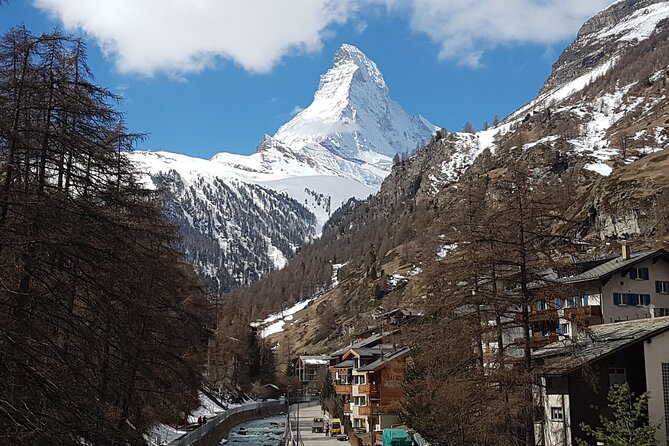
Zermatt’s best stories hide behind its polished ski-resort streets. This two-hour walk takes you from the train station through the shopping center, old wooden barns, the mountaineers’ cemetery, and the Kirchbrücke viewpoint, where the Matterhorn often appears above the rooftops. The old village and climbing history give the tour its real character.
I like the way the guide leaves the main shopping street and takes you into quieter corners of town. I also like the local touch: guides such as Remi, Tony, Mike, and Abraham explain Zermatt’s buildings, food, mountain life, and famous first ascent in a friendly, conversational way. The main drawback is time. Two hours passes quickly, and you may want a separate visit to the Matterhorn Museum or a mountain viewpoint afterward.
Key points before you book
- Old Zermatt beyond Bahnhofstrasse: See centuries-old barns, narrow lanes, and flat-stone roofs away from the busiest shops.
- Matterhorn stories with local context: Learn about the first ascent, mountain climbing, and the people remembered at the mountaineers’ cemetery.
- A useful first-morning activity: The walk helps you understand Zermatt before you tackle cable cars, hikes, or museums.
- Small group, maximum 15 people: The group size allows room for questions and picture stops, with the possibility of a much smaller group.
- Easy town walking: The route follows streets, lanes, the river, and town paths rather than a mountain trail, though comfortable shoes still make sense.
- Good photo stop at Kirchbrücke: This is the planned place for the classic Zermatt view with the Matterhorn behind town.
Start at Bahnhofplatz, Zermatt’s only arrival point
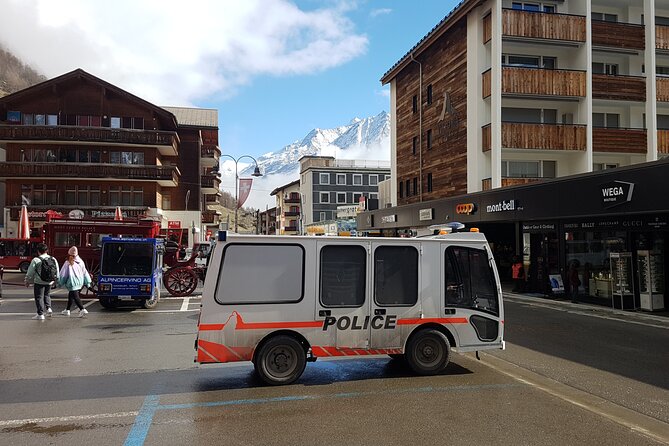
The tour begins at the Zermatt Tourist Information Center at Bahnhofplatz 5, beside the train station. This is an especially sensible meeting point because Zermatt can only be reached by train for both people and goods.
That fact helps explain the town before you even take your first steps. The station is not just a transport stop. It is the practical gateway to a car-free resort, and your guide uses it to introduce how Zermatt functions.
Allow a few minutes to find the tourist information center and meet your English-speaking guide. The activity is offered in English, and confirmation arrives when you book. Since the tour is often reserved well ahead of time, with an average booking lead of 56 days, reserve early if your dates are fixed.
The walk ends back at the same meeting point. That makes it easy to connect with a train, return to your hotel, or continue with a cable-car trip or museum visit.
A few more things to do in Zermatt worth a look
- Geneva Highlights 2-Hour Introductory Tour
★ 4.0 · 322 reviews - Best Intro to Bern in 2 hours with a Local
★ 4.5 · 20 reviews - Best Intro to Zurich in 2 hours with a Local
★ 3.5 · 5 reviews
Bahnhofstrasse shows modern Zermatt first
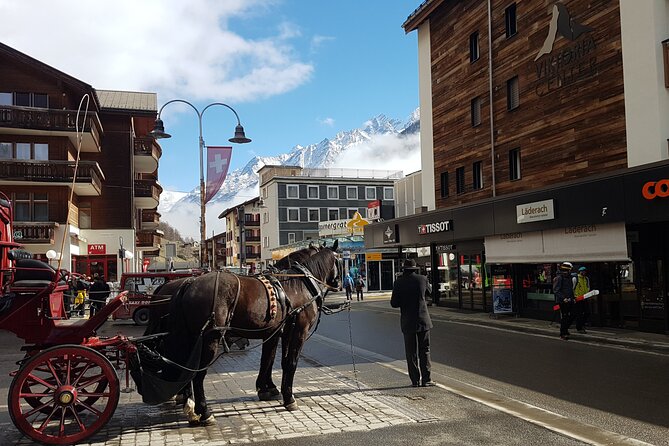
From the station, you walk along Bahnhofstrasse, Zermatt’s best-known shopping street. This is the part of town most visitors see first: hotels, shops, restaurants, and the polished face of an alpine resort.
The guide does not linger only among the commercial buildings. After a short stretch, the route turns away from the crowds. That change is one of the strongest reasons to choose a guided walk instead of simply wandering the center with a map.
I like this order. You first see the town’s tourist side, then gain a clearer sense of what lies behind it. Your guide can point out how Zermatt changed from a mountain village into an international resort without reducing the town to a string of expensive storefronts.
The route is not a strenuous hike, but the surface changes as you move from main streets to smaller lanes. Wear shoes that are comfortable for two hours of steady walking. The tour does not list a difficult physical requirement, and most people can take part, but visitors who prefer frequent sitting breaks should ask the guide to adjust the pace.
Gourmetweg links tennis, winter ice, and new buildings
The next section follows Gourmetweg, passing the tennis court. In winter, the court becomes a natural ice rink, giving you a quick look at how the town changes with the seasons.
This stop also brings attention to newer architecture in Zermatt. The contrast matters. A walk only through the old village can make Zermatt seem frozen in time, while a walk only through the resort center misses its older identity. Here you see the practical, modern town that sits beside the historic one.
The route takes about ten minutes at this point, so expect a brief introduction rather than a long architectural lecture. Guides can answer questions as you go, and previous visitors particularly valued being able to stop for photographs and ask about whatever caught their attention.
Hinterdorfstrasse reveals the old village
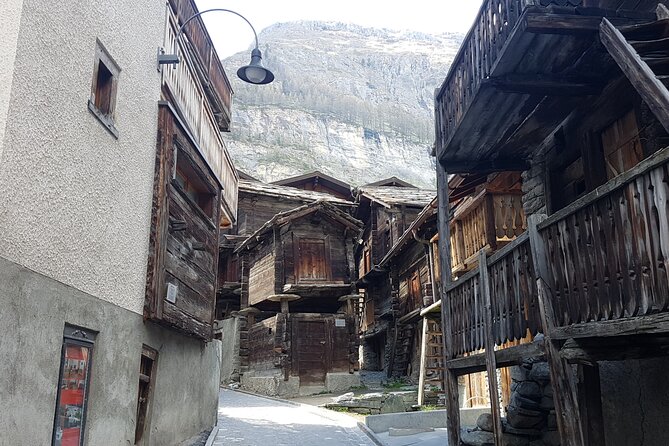
Hinterdorfstrasse is the heart of the walk. Here you enter old Zermatt, where the buildings show how people built in the village centuries ago.
Look for the small wooden barns and storage buildings, some more than 200 years old. Their raised construction and heavy stone details were shaped by the needs of mountain life. Your guide explains the purpose of the flat-stone rooftops, a detail easy to miss if you are walking alone.
The narrow alleyways make this section feel very different from Bahnhofstrasse. You are not simply looking at old buildings from a distance. You are moving through the spaces between them, seeing how the older village was arranged.
This is also where a guide earns the fee. A casual walk might give you attractive photographs, but not the reason for the roof design, the age of the barns, or the way older structures fit into modern Zermatt. Guides such as Tony and Remi have been praised for answering many questions and making local stories easy to follow.
The old village takes about 20 minutes, the longest single stop before the river section. If traditional buildings are your main interest, you may wish the tour spent even more time here. That is a fair tradeoff, since the walk also covers the Matterhorn’s climbing story and a major viewpoint.
Same base, a different sort of day:
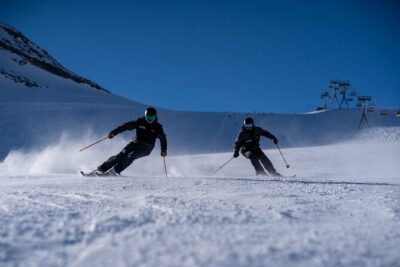
- Private Ski Lessons – 3 hours Zermatt
★ 5.0 · 279 reviews - Matterhorn Paragliding flight in Zermatt (20-25min)
★ 5.0 · 207 reviews - FLYMATTERHORN VIP Paragliding from Zermatt, With Matterhorn View
★ 5.0 · 192 reviews - 20 to 25 Minute Tandem Paragliding in Zermatt and Matterhorn View
★ 5.0 · 40 reviews
Monte Rosa Hotel connects Zermatt to mountaineering
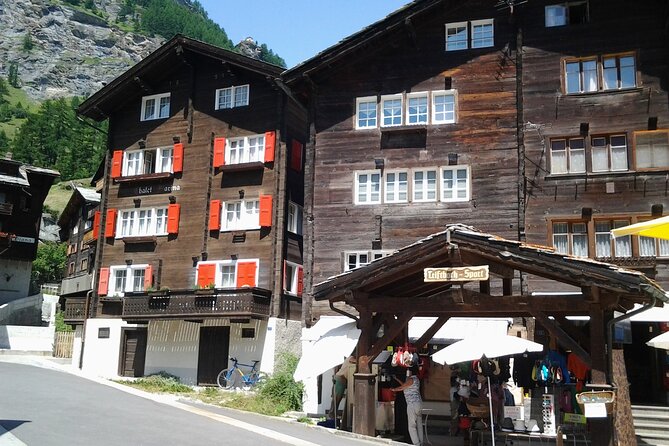
The route continues to the Monte Rosa Hotel, an important address in Zermatt’s tourism story. This is where the village’s growth as a mountain destination began to take shape.
The stop lasts about ten minutes, but its subject is much larger. Your guide introduces the history of the first ascent of the Matterhorn and explains how mountaineering changed Zermatt.
This part gives useful context to the rest of your stay. Cable cars, mountain hotels, climbing shops, and hiking routes can make the resort seem built entirely for leisure. The Monte Rosa story shows the older connection between Zermatt and serious alpine climbing.
A guide may also bring the story to life with old photographs and personal knowledge of the area. That was especially useful for visitors who wanted more than a date or a famous name. The strongest guides make the past feel connected to the streets you are walking through.
The mountaineers’ cemetery adds a sober pause
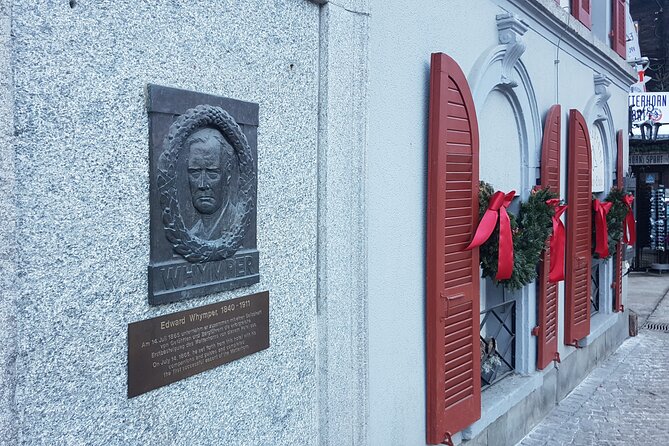
The mountaineers’ cemetery is one of the most affecting stops. It remembers climbers who died on the Matterhorn or nearby alpine peaks.
The walk slows here for about 15 minutes. This is not a sightseeing stop in the usual sense, and it should not be treated as a quick photo opportunity. It gives the Matterhorn a more serious place in your understanding of Zermatt.
The mountain is beautiful, but it is also demanding and dangerous. The cemetery helps you see the human cost behind the climbing stories introduced at the Monte Rosa Hotel.
Guides can explain the connection between the village and the surrounding peaks while allowing the place to speak for itself. If you are mainly looking for shopping and postcard views, this stop may feel more solemn than expected. If you want to understand why mountaineering matters so much here, it is essential.
Kirchbrücke provides the classic Matterhorn frame
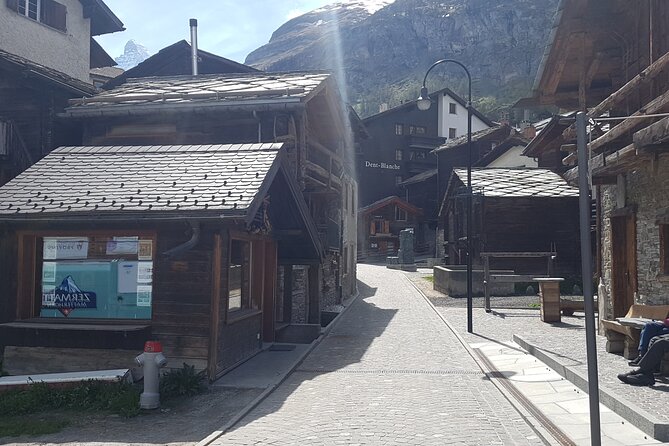
The viewpoint at Kirchbrücke is the planned photo stop. From the bridge, you can often frame the Matterhorn above the town, creating the familiar Zermatt picture.
Clouds can obscure the mountain. One previous walk saw only part of the Matterhorn through the clouds, so keep your expectations flexible. The viewpoint is still worthwhile because your guide can help you understand the angle and point out the relationship between the village and the mountain.
The stop lasts about 15 minutes. That is enough for photographs and questions, though not enough to wait indefinitely for a cloud break. If clear Matterhorn views are your top priority, you will need to allow time for a separate mountain excursion rather than relying only on this walk.
Your guide may suggest the best next step after the tour. One guide helped a couple arrange tickets for an observation site, while another guide joined visitors at the Matterhorn Museum. Those added favors are not listed as guaranteed features, but they show why it helps to ask questions before the walk ends.
Uferweg returns beside the Vispa River
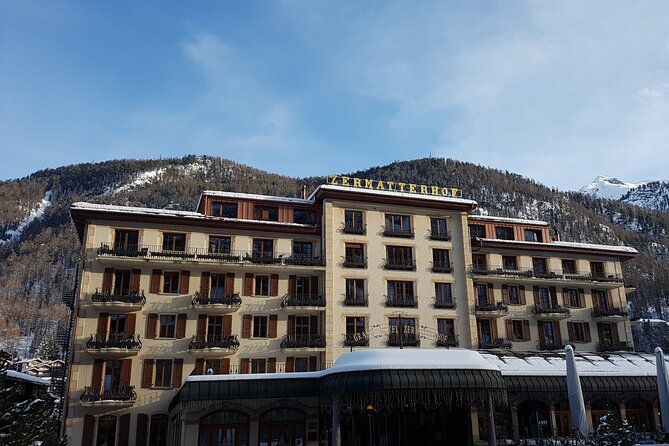
The final 30 minutes follow Uferweg beside the Vispa River. You pass hotels and newer apartments, then continue near the Sunnegga cable-car station before returning along Getwing street to the train station.
This section rounds out the picture of present-day Zermatt. After the old barns and cemetery, you see the modern accommodation and transport systems that support the resort today.
The river walk also gives the group a change of pace. It is less concentrated than Hinterdorfstrasse, with more time to discuss what you have seen and ask for practical suggestions. If you want lunch advice, this is a good moment to ask. One guide offered a useful restaurant recommendation at the end of the walk.
The route finishes where it began, with no complicated transfer. You can continue on foot, return to your hotel, or use the nearby transport network for the next part of your day.
What the $140.55 price means in practice
At $140.55 per person, this is not a cheap orientation stroll. You are paying for about two hours, an English-speaking local guide, and a group capped at 15 people. There are no admission charges along the route, so the main value lies in the interpretation rather than included attractions.
The price looks stronger when the group is small. Several walks ended up with only two people, turning the scheduled activity into a private conversation. That is not something you can count on, but the 15-person maximum is still more manageable than a large coach group.
I would judge the value by your interest in context. If you only want to walk around town and take pictures, you can do that without paying. If you want someone to explain the flat-stone roofs, old barns, first Matterhorn ascent, cemetery, and local development in a logical order, the cost is easier to justify.
The tour is also most useful early in your stay. Book it for your first full morning if possible. You will learn the layout of the village, see the old quarter before spending the rest of your time on mountain transport, and gather ideas for lunch or later visits.
Who will get the most from this walk
I would recommend it to first-time visitors who want a clear introduction without spending half a day on a formal excursion. It suits couples, families with children accompanied by an adult, and anyone who prefers conversation to an audio guide.
It is also a good fit if you care about architecture, climbing history, or local stories. The route is short enough to leave room for a cable-car trip, museum visit, or independent lunch afterward.
You may want to skip it if you already know Zermatt well or plan to spend every available hour on high mountain viewpoints. The tour stays in and around town, and the Matterhorn view from Kirchbrücke can be affected by cloud.
The group can include up to 15 people, though the actual number may be smaller. Service animals are allowed, and the meeting point is near public transportation. The activity is described as suitable for most people, but children must be accompanied by an adult.
Weather, cancellation, and timing details
The walk requires good weather. If poor conditions cancel it, you can choose another date or receive a full refund. If the minimum number of participants is not reached, the provider offers another date or experience, or a full refund.
You can cancel for a full refund up to 24 hours before the local start time. Changes or cancellations inside that 24-hour window are not accepted for a refund, so check your plans before booking.
The activity uses a mobile ticket and is offered in English. All stops have free admission, and the tour returns to the start rather than leaving you at a distant attraction.
Should you book the Zermatt village walk?
Book this tour if you want Zermatt to feel like a real place, not just a backdrop for the Matterhorn. The best parts are the turn away from Bahnhofstrasse, the old barns and stone roofs of Hinterdorfstrasse, the mountaineers’ cemetery, and the chance to ask a local guide direct questions.
The two-hour limit is the only real concern. You will get an excellent introduction, not an exhaustive tour of every museum, cable car, and mountain trail. For a first visit, that is often the right balance: enough history to give the town meaning, enough practical advice to plan the rest of your stay, and enough time left for the mountains.
FAQ
Where does the Zermatt village walk begin?
It begins at the Zermatt Tourist Information Center, Bahnhofplatz 5, beside the train station.
Where does the tour end?
The walk ends back at the original meeting point near the train station.
How long is the experience?
The tour lasts approximately two hours.
What language is the tour offered in?
The experience is offered in English.
How much does the tour cost?
The listed price is $140.55 per person.
How many people can join the group?
The group has a maximum of 15 participants.
Does the tour include admission tickets?
All listed stops have free admission, so there are no entrance tickets included or required along the walking route.
Is the walk suitable for children?
Children can participate, but they must be accompanied by an adult.
Are service animals allowed?
Yes, service animals are allowed.
What happens if the weather is poor?
If poor weather causes the tour to be canceled, you can choose a different date or receive a full refund.
Just added in Zermatt
- Matterhorn Private Skiing Day Zermatt★ 5.0 · 9 reviews
- Zermatt’s Alpine Charms – Private Guided Village Tour★ 5.0 · 6 reviews
- Private Mystic Zermatt Tour: Peaks, History & Culture★ 4.5 · 6 reviews
- Private Mt. Gornergrat and Zermatt Tour★ 5.0 · 15 reviews
- Zermatt Guided Day Hike★ 5.0 · 6 reviews
- Zermatt Village Walk and Mt. Gornergrat Private Day Trip★ 4.5 · 12 reviews
- Klein Matterhorn and glacier trail private full day hike★ 5.0 · 7 reviews
- Private Snowboarding Lessons – 3 Hours Zermatt★ 5.0 · 9 reviews
Tours in Zermatt, compared.
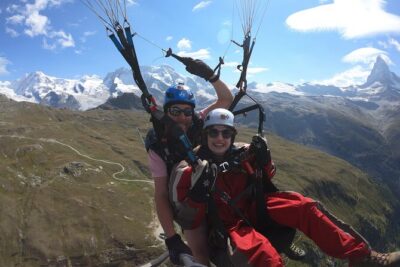
Matterhorn Paragliding flight in Zermatt (20-25min)
Read our review →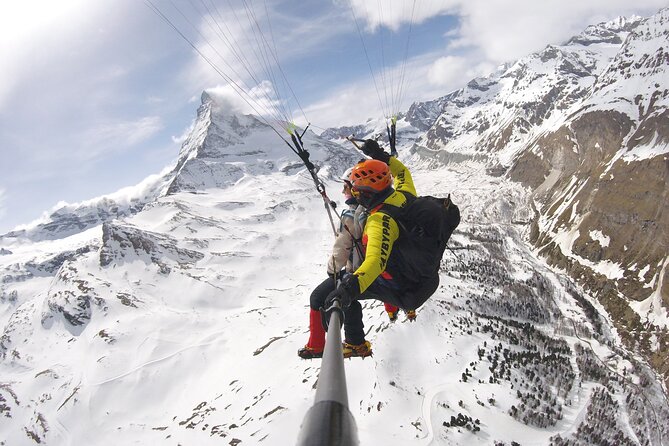
FLYMATTERHORN VIP Paragliding from Zermatt, With Matterhorn View
Read our review →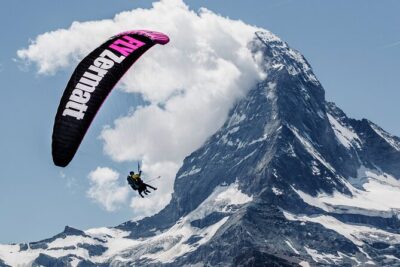
20 to 25 Minute Tandem Paragliding in Zermatt and Matterhorn View
Read our review →
HALF DAY 3-Hour Private Ski Lessons in Zermatt, Switzerland
Read our review →
Browse the lists this tour appears in