
Reviewed · WALKING TOURS
Private 1.5-Hour Nightwatchman Walk in Medieval Lucerne
The best part of this Lucerne walk is the way it turns familiar sights into a nighttime story. A costumed nightwatchman leads you from St. Peter’s Chapel across the Old Town, using a projector, old maps, props, and local legends to show how medieval Lucerne worked after dark. I especially like the 1597 Martiniplan, which lets you match the old city with streets and buildings still around today.
I also like the guide’s personal connection to Lucerne. Guides named Rolf and Ralph bring humor, local pride, and plenty of detail, including small features such as guild symbols and house murals that are easy to miss in daylight. The main drawback is price: at $165.26 per person, this makes the most sense for a private group that values storytelling rather than a quick orientation walk.
Key points to know before booking
- The Martiniplan gives the walk a clear historical thread: You follow Lucerne as it appeared in 1597, then compare the map with the Old Town you see today.
- The guide uses projected images and props: Medieval art, punishment scenes, and the Dance of Death become part of the presentation.
- The route covers the city’s best-known medieval sights: Expect St. Peter’s Chapel, the Water Tower, Chapel Bridge, Kornmarkt, Weinmarkt, the Reuss River, and parts of the Musegg Wall.
- This is a private tour: Only your own group takes part, making it easier to ask questions and set the pace within the scheduled route.
- The tone mixes facts with folklore: You hear about city law, fires, torture, ghosts, the Toggeli, unlucky stonemasons, and everyday life.
- Winter changes the length: From November through March, the walk lasts about one hour instead of 90 minutes.
Start at St. Peter’s Chapel with the fire horn
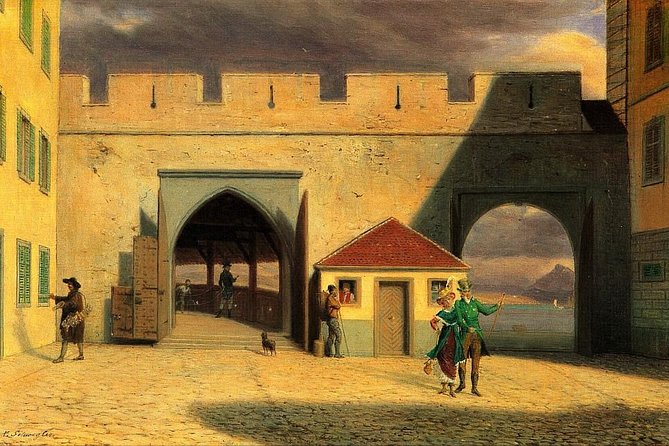
The meeting point is Rosengart Platz, near St. Peter’s Chapel in central Lucerne. The walk begins with a fire horn and an invocation prayer, a fitting opening for a nightwatchman whose work was tied to fire, danger, and keeping order after sunset.
At the chapel, the guide sets up the central idea of the evening: medieval Lucerne was not just a pretty collection of old buildings. It was a working town with strict rules, social ranks, religious duties, trade, crime, and constant concern about fire.
You get an introduction to the nightwatchman’s difficult life, then see a projected view of medieval Lucerne. The projector is a useful touch because it gives you something concrete to study rather than asking you to picture the past from a bare wall or modern street.
St. Peter’s Chapel dates to the 12th century and is described as Lucerne’s first church. Nearby is the city’s first private stone house. That detail leads to the explanation behind the expression stone rich: owning a stone house once signaled unusual wealth and security.
The Martiniplan, Lucerne’s first city map, dates from 1597. This is one of the strongest parts of the walk. You can see the route marked on the old plan and note how many buildings and street lines remain. For me, that sort of comparison is more useful than a string of dates because it makes the city’s age visible under your feet.
More Walking Tours in Lucerne
- Exclusive Private Lucerne Walking Tour with Local Guide 3 Hours
★ 5.0 · 80 reviews - 1.5-Hour Small-Group Nightwatchman Walk in Medieval Lucerne
★ 4.5 · 34 reviews - Lucerne Half-Day Small Group Walking Tour incl. Lake Cruise
★ 4.5 · 15 reviews
The Water Tower and Chapel Bridge tell two different stories
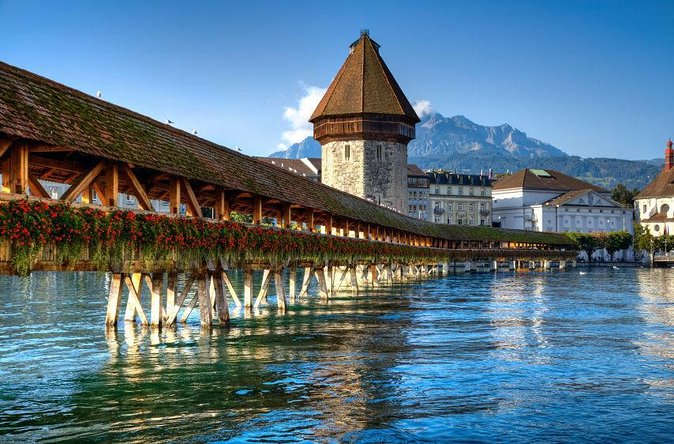
At Chapel Bridge, the guide corrects a common assumption. The Water Tower is older, built in the late 13th century, while Chapel Bridge dates from 1365. The tower came first, and its role was far more serious than the picturesque landmark you see in photographs today.
You hear about the Water Tower’s torture chamber, dungeon, and secret room. The tour also uses pictures of the tower’s interior, which helps since the walk focuses on the outside and nearby streets rather than an extended interior visit.
The guide explains where Chapel Bridge got its name and points out why the bridge crosses the river diagonally. You also see its painted panels as you cross later in the walk. The bridge is one of Lucerne’s most photographed sights, but the nightwatchman’s account gives it a stronger connection to the city’s defensive and religious past.
The bridge is free to view, but do not expect the tour price to include entry to every building mentioned. Several stops list admission as not included, although the walk itself is mainly an outdoor route.
Furrengasse and Kapellplatz add folklore to the facts
From the bridge, the route turns toward Kapellplatz and Furrengasse. Here the subject shifts from buildings to life in the medieval Republic of Lucerne.
You hear about the city during its prosperous years, then about a ghost and the Toggeli, described as an incubus or love robber. This is where the tour gains its night-walk character. The stories are not simply a list of official events. They include the fears, superstitions, and strange tales that helped people explain what happened after dark.
That mix suits Lucerne well. You get the factual background of the streets, but the costumed guide also gives the city an element of suspense. Families with older children should enjoy this section, especially if they like legends more than formal museum talks.
The route is still a walking tour through active Old Town streets. You should expect uneven historic paving and changing weather, so comfortable shoes and suitable clothing matter more than dressing up for the occasion.
Kornmarkt reveals how old Lucerne measured power
Kornmarkt, the Town Hall Square, brings the walk into the civic center. The Renaissance Town Hall and its tower give the guide a chance to explain old public life and the clock with no minute hand.
That missing minute hand is a small but telling detail. It reflects a time when people did not measure the day with the same precision we do now. The square also introduces the Giant of Reiden and the old official measures of Lucerne, the Lucerne Foot and Elle.
These measurements may sound minor, but they show how trade and authority worked. A town needed agreed standards for selling goods, building, and settling disputes. Seeing the old measures turns an abstract discussion about medieval commerce into something you can picture.
Kornmarkt is also a good place to pay attention to façades and signs. The guide points out details that are easy to pass without notice, including symbols connected with local guilds.
Other guided walks around Lucerne:
- Lucerne Lakeside and Villas Private Walking Tour
★ 4.5 · 14 reviews - Lucerne Walking tour and Cheese Tasting
★ 5.0 · 11 reviews - Mt. Titlis Glacier & Lucerne Old Town Tour | From Lucerne
★ 5.0 · 10 reviews - Lucerne Private Walking Tour with a castle visit!
★ 5.0 · 7 reviews
Brandgässli and Weinmarkt bring trade and conflict together
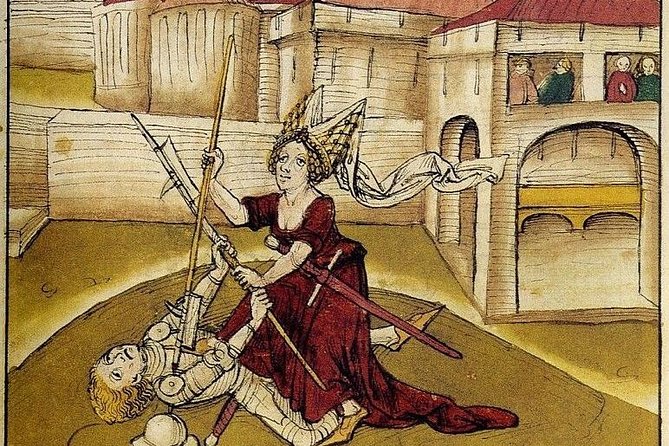
In narrow Brandgässli, you hear about a Lucerne riot before continuing toward the former fish market, now known as Weinmarkt. This part of the route connects the city’s political tensions with its commercial life.
At Weinmarkt, look up at the old guest house signs and painted façades. The houses carry more than decoration. Their signs helped identify businesses in an age when many people could not rely on numbered addresses in the modern sense.
The former pharmacy house of Renward Cysat has a Latin sentence on it: Amor medicabillis nullis herbis, meaning there is no cure for a broken heart. It is a memorable line because it links a practical business, an old house, and a very human problem.
I like this stretch of the walk because it rewards looking above eye level. During the day, you can easily pass through Weinmarkt thinking you have seen it all. At night, with the guide directing your attention, the signs, murals, and inscriptions become part of the story.
At Zöpfli, medieval law gets uncomfortably real
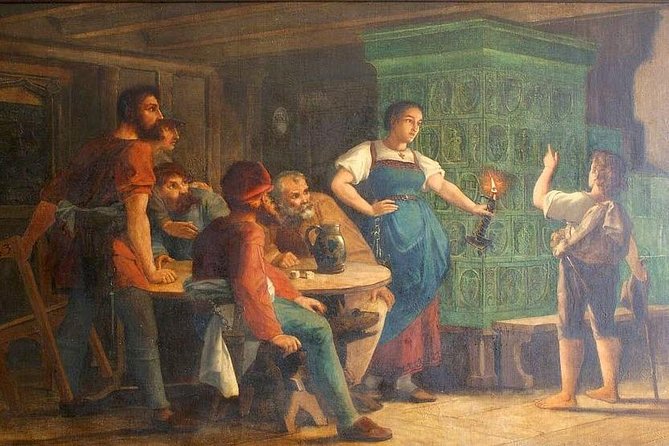
At the riverside square called Im Zöpfli, the subject turns to law and order. The guide uses projected paintings to show prosecution, interrogation, and corporal punishment in medieval Lucerne.
This is one of the darker parts of the evening. You will hear how justice operated before modern courts, policing, and prison standards. The images make the subject more direct, so this section may not suit very young children or anyone looking for a light ghost walk.
It also helps explain why a nightwatchman mattered. The role was not just theatrical. A nightwatchman belonged to a town where fire, theft, disorder, and suspicion were serious concerns. The walk uses that role to connect the city’s streets with the people who guarded them.
Reussbrücke opens views toward the city’s defenses
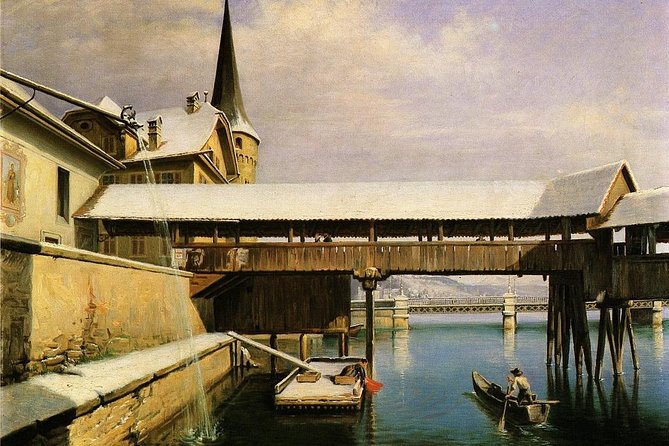
Crossing Reussbrücke, you see the Spreuerbrücke, also called the Mill Bridge, along with the Needle Dam and sections of the Musegg Wall. This is a short stop, but it places Lucerne’s Old Town in a wider defensive and engineering setting.
The Needle Dam controls the water level of the Reuss, while the bridges and walls show how movement and protection shaped the city. From the river, the relationship between Lucerne’s buildings and its waterway becomes easier to understand.
The walk does not promise a full visit inside the Musegg Wall or a long stop at every structure. Instead, you get views and explanations as part of the moving route. That keeps the tour flowing, though anyone wanting detailed interior visits should plan separate time.
The old pharmacy window and guardian demons
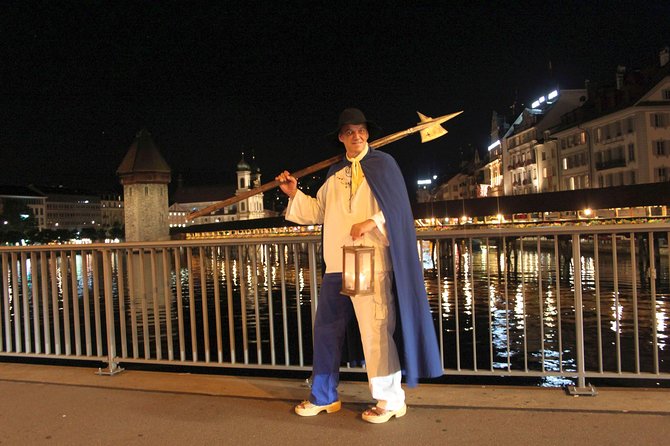
A few steps farther is the medieval pharmacy window of the Alte Suidtersche Apotheke. The guide explains the house and its location, with the window providing another example of how old trades remain visible in the modern city.
The route then continues to the Ritterscher Palace area and the house of Lux Ritter. Here you hear why the first two floors look different from the third. Architectural changes become clues to the building’s past rather than just visual curiosities.
The guide also tells the story of Hans von Trient, an unlucky stonemason, and points out guardian demons. These details fit the walk’s central style: you are not only hearing about famous monuments, but also the people, beliefs, and odd stories attached to ordinary façades.
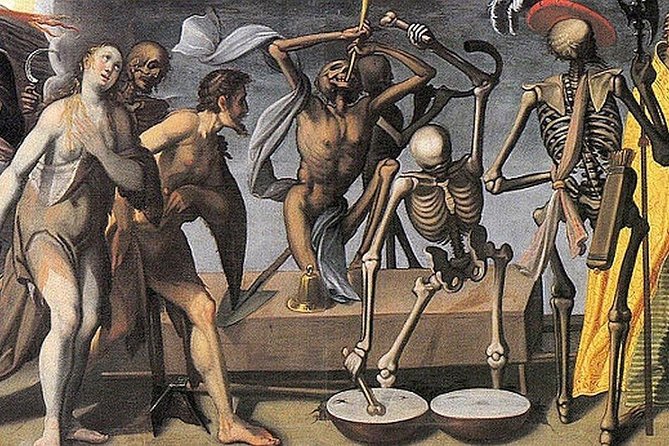
One of the most striking presentations here is the Dance of Death. Seven paintings are projected onto a house wall while the guide explains them. Because the images appear in the same streets where the old stories unfolded, the presentation feels more connected to Lucerne than a standard slideshow would.
The Jesuit Church marks a change in Lucerne’s story
The route passes the Jesuit Church, identified as Switzerland’s first Baroque building, dating to 1677. This is later than the medieval subjects that dominate the walk, but it gives you a sense of how Lucerne changed over time.
The church also helps prevent the evening from becoming too narrowly focused on medieval ruins. Lucerne’s center is a mix of periods, and the guide uses that mix to show how one city continued to rebuild, decorate, worship, and adapt.
You may want to pause here on another visit for a closer look. During this tour, the church is a passing point rather than a long interior stop.
Cross Chapel Bridge back to the starting point
The final section takes you across Chapel Bridge again. Now you can look more closely at the paintings and understand why the bridge sits diagonally across the river.
Ending where the walk began is practical. You do not have to find your way through unfamiliar streets late at night, and you finish near the main Old Town sights. The whole route is designed as a loop, with roughly ten minutes devoted to each major stop.
The advertised duration is about one to 90 minutes. From November through March, it lasts one hour. That seasonal difference matters if you are comparing it with a longer evening activity or building dinner plans around it.
What the $165.26 price buys you
At $165.26 per person, this is not a budget walk. The value comes from the private format, the costumed professional guide, the prepared visual material, and the depth of the storytelling.
A private tour is more worthwhile for a family or small group than for a solo visitor. Only your group takes part, so you can ask questions and focus on subjects that interest you, such as architecture, law, legends, or local life. Group discounts may also improve the price for larger parties.
You receive some postcards of old Lucerne, and taxes, fees, and handling charges are included. There are no listed entrance fees for most stops, but some sites show admission as not included. Treat this as a guided outdoor walk, not as a ticket covering several attractions.
The tour is booked an average of 107 days ahead, which suggests that you should not leave it until the last evening of a short Lucerne stay. Confirmation arrives at booking, and free cancellation is available up to 24 hours before the start time. Changes or cancellations inside that window are not refunded.
Who will enjoy this night walk most
I would choose this for you if you like history delivered through stories rather than a formal lecture. The tour suits families with teenagers, couples, and small groups who want more than a standard daytime look at Chapel Bridge.
It is especially useful after you have seen Lucerne’s Old Town once and want help noticing what you missed. The guide can point out guild symbols, murals, old signs, inscriptions, and architectural clues that are easy to overlook on your own.
You should also like a little theatrical flair. The nightwatchman costume, fire horn, prayer, projector, props, ghosts, demons, and Dance of Death are central to the experience. If you prefer a strictly academic tour with no folklore or performance, this may feel too staged.
Most people can participate, service animals are allowed, and the route is near public transportation. The walk operates in all weather, so bring clothing suited to the forecast. Rain did not prevent the guide from presenting the material, but wet Old Town streets can make a long evening less pleasant.
Should you book the Lucerne Nightwatchman Walk?
Book it if you want Lucerne’s famous sights explained through local stories, old maps, law, folklore, and small visual details. The Martiniplan, projected images, and costumed guide give the walk more shape than a basic city stroll.
I would be most likely to book it for a private family group or a couple with a strong interest in medieval towns. At this price, I would not choose it simply to see Chapel Bridge or the Water Tower. You can see those for free. Choose it for the guided interpretation, the private setting, and the chance to notice the city through a nightwatchman’s eyes.
FAQ
Where does the Nightwatchman Walk begin?
The tour starts at Rosengart Platz, 6004 Luzern, Switzerland.
Where does the tour end?
The walk ends back at the meeting point.
How long does the tour last?
It lasts about one to 90 minutes. From November through March, the duration is one hour.
Is the tour private?
Yes. Only your group participates in the private tour.
What language is offered?
The tour is offered in English.
What happens in bad weather?
The tour operates in all weather conditions, so you should dress appropriately.
Can I cancel for a full refund?
Yes. You can cancel at least 24 hours before the experience start time for a full refund. Cancellations or changes made less than 24 hours before the start are not refunded or accepted.
Just added in Lucerne
- Private Transfer: Lucerne to Zurich Airport ZRH by Luxury Van★ 4.5 · 6 reviews
- Weggis Vitznau Foxtrail Helios★ 4.5 · 8 reviews
- The Lives and Legends of Lucerne: A Self-Guided Audio Tour★ 5.0 · 6 reviews
- Private Transfer: Lucerne to Zurich Airport ZRH by Business Car★ 5.0 · 11 reviews
- Tandem Flight Zurich-Engelberg★ 5.0 · 7 reviews
- Touristic highlights of Lucerne on a Private half day tour with a local★ 4.0 · 5 reviews
- Alpine Majesty:Exclusive Private Tour to Mount Titlis from Luzern★ 4.0 · 5 reviews
- Panoramic E-Bike Tour with a Lake Cruise★ 5.0 · 10 reviews
Walking Tours, compared.

Award-Winning Geneva Chocolate &Old Town Tour with Boat Ride (3h)
Read our review →
Zurich Walking Tour With Cruise and Aerial Cable Car
Read our review →
3 in 1: Zurich Walking Tour – Cruise on the Lake – Cable Car Ride to Felsenegg
Read our review →
Bern Walking Tour: Explore Top Sights & Hidden Gems
Read our review →Browse the lists this tour appears in