
Reviewed · SELF-GUIDED TOURS
Self-Guided Audio Tour to the Many Faces of Geneva
Geneva’s main sights become clues in a larger moral story on this self-guided walk. You’ll move from Empress Sissi’s final chapter to the Jet d’Eau, Reformation Wall, St. Pierre Cathedral, and the Escalade Fountain while considering anger, pride, mercy, courage, and justice.
I like the clear directions with photos, which help you move from one stop to the next without a guide. I also like the freedom to pause, take breaks, or spend longer at a favorite site. The main drawback is practical: the audio depends on a solid internet connection, and there is no offline download option.
Key points to know before you go
- A moral lens on Geneva: The commentary connects famous sights with sins and virtues, not just dates and names.
- A useful first-day walk: The route links many central landmarks in about one to two hours.
- A true self-guided experience: You receive a link after booking and walk privately with your own phone and headset.
- Free outdoor sights: Admission is free at all listed stops, so your payment covers the audio content and route planning.
- English audio only: The tour is offered in English with recordings by professional speakers.
- Bring reliable mobile data: Slow loading or dropouts can interrupt the tour, and the audio cannot currently be downloaded for offline use.
Geneva told through sins, virtues, and public monuments

This is not a standard sightseeing walk. Instead of giving you a simple list of dates, the audio asks you to look at Geneva through human behavior: pride, envy, anger, mercy, courage, justice, and temperance.
That approach gives the city a clear theme. It also sets expectations. If you want a traditional history lecture packed with political facts, this may feel too philosophical. If you enjoy questions about why people act as they do, the route offers a different way to read familiar monuments.
At $13.29 per person, the value rests on the quality of the narration and directions rather than on entry tickets. Every stop is free to visit, and there is no live guide. You are paying for a prepared route, audio commentary, photos, and the convenience of having Geneva’s center arranged for you.
I see the tour as a good middle ground between wandering alone and joining a group. You get structure without a fixed pace. You can stop for a drink on a hot day, replay a section, or linger at St. Pierre Cathedral before continuing.
Other tours you can walk on your own in Geneva:
- Self-Guided Chamonix with Aiguille du Midi or Mer de Glace
★ 3.5 · 35 reviews - Chamonix Self-guided Sightseeing Tour from Geneva
★ 4.0 · 34 reviews - Unusual Audio Tour of Geneva
★ 5.0 · 8 reviews
Starting beside Empress Sissi’s statue
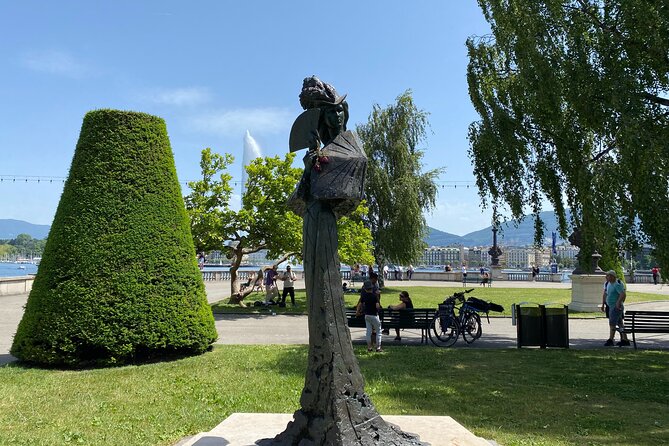
The walk begins at Quai du Mont-Blanc 10, near the statue of Empress Elisabeth of Austria, widely known as Sissi. The opening story focuses on her assassination by an anarchist and asks not only how the attack happened, but why.
That is a strong starting point because it introduces the tour’s habit of looking beyond the surface. You are not simply told that a famous figure died in Geneva. The commentary uses the event to raise questions about politics, anger, and personal motives.
Plan about ten minutes here. The location near the lakefront also gives you an easy point of orientation before you begin walking toward the city’s other landmarks. Since the start is outdoors and admission is free, you can begin without checking into a venue or meeting a guide.
The Jet d’Eau and Brunswick Monument
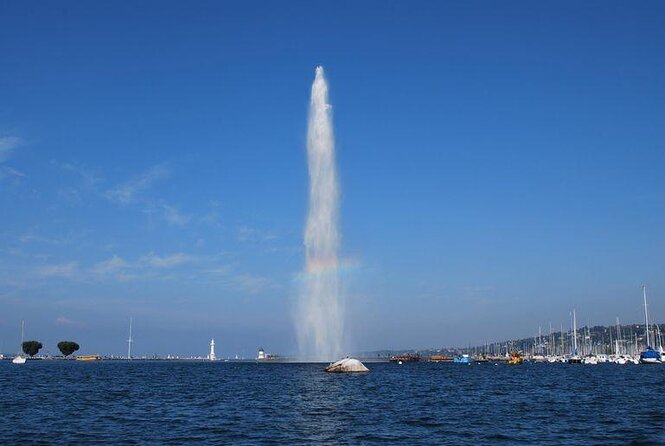
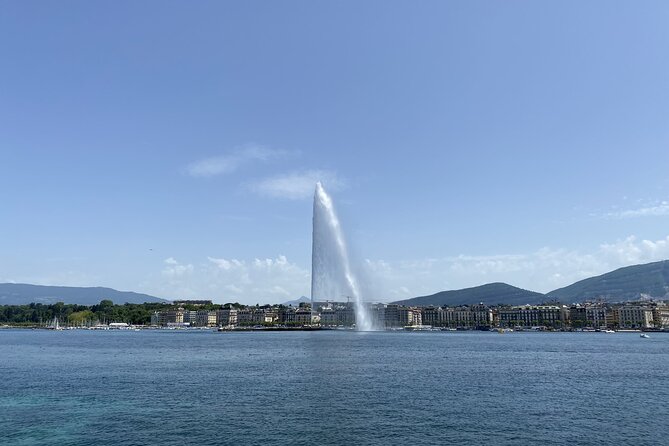
The next stop is the Jet d’Eau, Geneva’s famous lake fountain. You spend about five minutes considering how a huge public fountain might contribute to making the world a better place.
That is a short stop, so expect an idea rather than a long technical explanation. The fountain works well in the route because it is instantly recognizable, yet the audio encourages you to think about public works, pride, and civic identity instead of simply taking a photograph.
From there, the route continues to the Brunswick Monument. This ornate monument was funded by a generous benefactor, and the commentary explains why he made the donation. It also points out the images of virtues placed around the structure.
Give yourself another five minutes here. The stop is brief, but the monument rewards a close look. The audio gives you a reason to examine details that are easy to miss when you are walking through Geneva without context.
Rousseau, the National Monument, and the Flower Clock

At the statue of Jean-Jacques Rousseau, the theme turns inward. Rousseau is presented through the sins he openly confessed, adding a personal and slightly uncomfortable angle to a familiar literary and political figure.
This stop lasts about ten minutes. It is one of the places where the tour’s moral focus is most obvious. You are not getting a broad biography. Instead, you are hearing how a public thinker’s own admissions can shape the way we judge him.
The National Monument follows with a short explanation of its winning selection in a competition. This stop takes around five minutes and adds a civic layer to the walk. The story is about how Geneva chose the monument it wanted, not simply what the finished structure represents.
Then comes the Flower Clock, one of the city’s best-known symbols. The ten-minute commentary links it with pride. That may sound surprising at first, but it fits the tour’s method: take a familiar object and ask what human quality it reflects.
The Flower Clock is also a useful place to slow down. You may want to listen carefully, look at the design, and take photographs before entering the older part of the city.
A few more things to do in Geneva worth a look
- Chamonix & Mont Blanc Panoramic Sky-Glass Bus Guided Day Trip
★ 4.0 · 1,324 reviews - Chamonix Mont-Blanc Full Day Guided Tour
★ 5.0 · 314 reviews - Chamonix & Mont Blanc Guided Day Trip with SkyView Panoramic bus
★ 4.5 · 310 reviews - Geneva Private Custom Walking Tour With A Guide (Private Tour)
★ 4.5 · 47 reviews
Mercy beside the Lutheran church and Palace of Justice
The Lutheran Church of Geneva is a compact stop of about five minutes, but it introduces one of the tour’s clearest comparisons. The audio considers different religious views on how sins and good deeds affect salvation.
This section connects naturally with the nearby Palace of Justice, where the discussion turns to mercy. The physical closeness of a church and a courthouse gives the commentary a practical setting. You are not considering religious ideas in isolation. You are standing near a place tied to judgment and legal decisions.
The tour does not require you to enter either building. That keeps the route simple and makes the timing predictable, though it also means the experience focuses on exterior commentary rather than interior visits.
Place Bourg-de-Four and Geneva’s justice story
At Place Bourg-de-Four, the route looks at a monument honoring a Genevan champion for justice. The commentary also brings up the city’s former red-light districts.
This is one of the more unusual stops because it places civic ideals beside less polished parts of urban history. Geneva is not presented as a spotless postcard city. You get a reminder that public morality, law, and private behavior have often collided in the same streets.
Allow about ten minutes. The stop works best if you listen while looking around the square and considering how the area may have served different purposes over time. The audio’s tone is more reflective than sensational, based on the tour’s stated focus on justice and human vice.
St. Pierre Cathedral and the city’s hardest judgments
St. Pierre Cathedral is the longest stop, at about twenty minutes, and deserves the extra time. The commentary links the cathedral with temperance, then points you toward the statue of the Prophet Jeremiah, often called the weeping prophet.
You also hear about Geneva’s Town Hall and its stone bench. According to the tour, judges once used that bench to pronounce death sentences. That detail gives the old center a sobering edge. A church, a government building, and a place of legal punishment come together in one short section of the city.
This is the point where the route’s ideas carry the most weight. Temperance is not treated as an abstract word. It sits beside religious belief, grief, public authority, and the consequences of judgment.
You may want to reserve more than twenty minutes if you plan to look closely at the cathedral or pause between audio sections. The stated tour time is about one to two hours, but your own pace will decide the final length.
The Reformation Wall and Geneva’s stern reformers
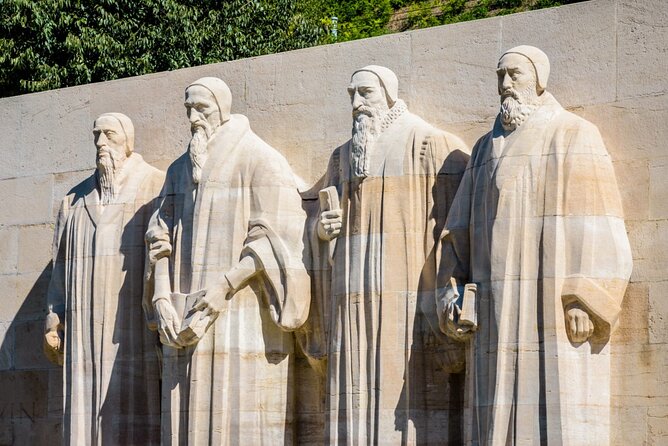
The Reformation Wall is the next major landmark. The ten-minute commentary asks which theologians were criticized for being inflexible, merciless, and heartless.
This is a useful place to hear the tour’s critical side. Geneva’s Protestant legacy is not treated only as a proud civic achievement. The route also asks what happens when religious certainty becomes harsh or unbending.
The wall itself is a powerful visual stop, but the audio adds a moral question to the familiar names and figures. You are encouraged to consider both the force of reform and the human cost of strict judgment.
Because this is an outdoor monument, the stop remains easy to fit into your day. You can listen, inspect the figures, and continue without waiting for opening hours.
Dufour, Henri Dunant, and the fight against suffering
At the statue of General Guillaume-Henri Dufour, the tour turns to courage and his struggle against evil. The stop lasts about five minutes, so expect a focused portrait rather than a full account of his career.
The route then moves to the bust of Henri Dunant, one of the founders of the Red Cross. The ten-minute commentary covers details of Dunant’s life and draws surprising parallels with Leo Tolstoy.
This pairing gives the closing section a strong contrast. Dufour is presented through courage and resistance, while Dunant brings questions about compassion, humanitarian action, and the burden of conscience.
If you have heard only the most basic facts about Dunant, this may be one of the more rewarding sections. The route uses his life to show how a public figure can be connected to wider moral and social questions.
Finishing at the Escalade Fountain
The final stop is the Escalade Fountain on Rue de la Confédération. The five-minute commentary connects it with the courage of the Genevans.
Ending here gives the walk a distinctly local note. The route begins with an international royal figure and finishes with a story tied to Geneva’s own identity. You have also moved through justice, religion, reform, military courage, and humanitarian ideals along the way.
The end point is separate from the starting point, so this is a one-way walk rather than a loop. That is helpful if you want to continue sightseeing after the tour, though you should remember where the route finishes before planning your next stop.
How the self-guided format works in practice
After booking, you receive a link for the audio tour. You use your own mobile phone and headset, and there is no live guide or group to meet. The activity is private, meaning only your own party takes part.
The supplied directions include photos and detailed route guidance. That matters in a city where a short wrong turn can cost time, especially when moving between the lakeside and the old town.
The biggest practical issue is internet access. The audio relies on mobile data, and a weak connection can cause slow loading or dropouts. Restarting the tour may be necessary if the connection breaks. There is currently no offline download option, so check that your phone has reliable data before setting out.
I would also start with a charged phone and bring headphones that are comfortable for walking. Those are simple precautions, but they matter more here than they would on a live tour where a guide can continue speaking while you catch up.
The route is offered in English only. Service animals are allowed, the tour is near public transportation, and most people can take part. The booking confirmation arrives at the time of booking, and free cancellation is available up to 24 hours before the scheduled start time.
Is $13.29 a fair price?
For a one to two-hour walk through central Geneva, $13.29 is a modest cost if you want organized commentary without paying for a private guide. The value is strongest when you would otherwise walk past the monuments with only a basic understanding of what they mean.
You are not paying for admission, transport, or personal assistance. You are paying for the route design, recorded narration, photos, directions, and the unusual connection between public places and moral ideas.
The price is less convincing if you already know Geneva well or want a detailed conventional history tour. The philosophical sections take up a large share of the experience, and the commentary may feel too focused on religion and morality for someone looking mainly for political or architectural facts.
Who should choose this Geneva walk?
I would recommend it to you if you like walking tours but prefer to set your own speed. It suits independent visitors arriving in Geneva who want quick orientation and a planned route through the central sights.
It is also a good fit if you enjoy unusual themes. The links between monuments and sins or virtues give the walk a clear identity, and the material about Sissi, Rousseau, the Reformation, and Henri Dunant adds variety.
You may want a different tour if you need a live guide, dislike using mobile data, or want to download audio before leaving. It is also not the best match for you if your main goal is a dense timeline of Geneva’s political and architectural history.
FAQ
How long does the self-guided Geneva audio tour take?
The tour takes approximately one to two hours, depending on how quickly you walk and how long you spend at each stop.
Where does the tour begin?
It begins near the Monument to Empress Sissi at Quai du Mont-Blanc 10, 1201 Genève, Switzerland.
Where does the tour finish?
The route ends at the Fontaine de l’Escalade on Rue de la Confédération 4, 1204 Genève, Switzerland.
Is a live guide included?
No. This is a self-guided private activity. You follow the link provided after booking and listen on your own phone.
What do I need to bring?
You need your own mobile phone with internet access and a headset.
Is the tour available in languages other than English?
The tour is offered in English.
Can I cancel for a full refund?
Yes. You can cancel up to 24 hours before the experience start time for a full refund. Changes or cancellations made less than 24 hours before the start time are not accepted.
Should you book this tour?
Book it if you want an easy, private way to get oriented in Geneva and you like commentary that asks moral questions rather than simply listing facts. The route covers many of the city’s central sights, and the photo directions make it simple to follow at your own pace.
Skip it if you need offline audio, a live guide, or a traditional history-first walk. For the right listener, $13.29 buys a thoughtful route through Geneva. Just make sure your phone has dependable data before you begin.
Just added in Geneva
- Swiss Vineyard Wine Tasting Tour in Vaud★ 5.0 · 5 reviews
- Six Hour Private Tour of The Swiss Riviera★ 5.0 · 11 reviews
- Geneva Highlights Tour by TaxiBike★ 5.0 · 6 reviews
- Old Town Geneva Private Walking Tour★ 4.5 · 4 reviews
- Private Trip from Geneva to Annecy in France★ 5.0 · 7 reviews
- Geneva Walking Tour for your private group with an official guide★ 5.0 · 5 reviews
- Private Trip from Geneva to Swiss Riviera Montreux & Chamonix★ 3.5 · 6 reviews
- Swiss Wine Tasting at Lavaux Vineyards: Private Trip from Geneva★ 5.0 · 5 reviews
Self-Guided Tours, compared.
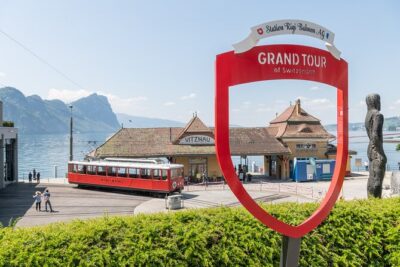
Mt. Rigi Self-Guided Tour: Lake Lucerne Cruise and Mountain Spa
Read our review →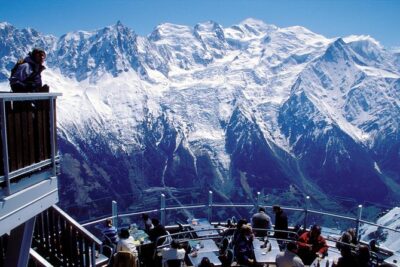
Self-Guided Chamonix with Aiguille du Midi or Mer de Glace
Read our review →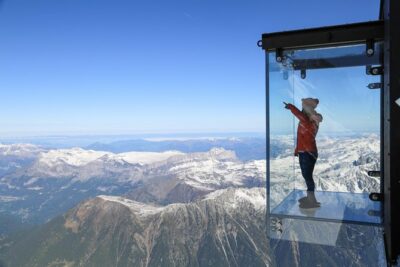
Chamonix Self-guided Sightseeing Tour from Geneva
Read our review →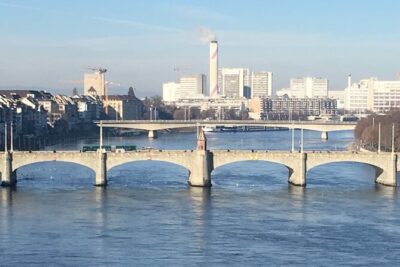
The Best of Basel’s Hidden Treasures: A Self-Guided Audio Tour
Read our review →
Bern Scavenger Hunt and Highlights Self Guided Audio Tour
Read our review →Browse the lists this tour appears in